Aircraft
Private jet sizes, and the airports they fit
Seats, range, cabin height and typical hourly rates for each class, plus the question most guides skip: which airports near you each aircraft can use.
Every class at a glance
Hourly rates are US market estimates before the 7.5% federal excise tax, fees and positioning. Range shrinks with a full cabin and headwinds.
| Class | Seats | Typical range | Cabin height | Hourly rate (est.) | Airport fit |
|---|---|---|---|---|---|
| Turboprop | 6–9 | ~1,800 nm | ~4.8–4.9 ft | $1,800–3,200 | Short strips, islands and mountain fields |
| Very light jet | 4–5 | 1,400–1,550 nm | ~4.8 ft | $2,800–4,200 | Varies; ask us |
| Light jet | 6–8 | 2,000–2,150 nm | ~4.8–4.9 ft | $3,500–5,500 | Most regional and county airports |
| Midsize jet | 7–9 | ~2,100 nm | ~5.7 ft | $4,500–7,000 | Most regional airports; check the shortest runways |
| Super-midsize jet | 8–10 | 3,200–4,000 nm | ~6.0 ft | $6,500–9,500 | Longer runways; check small fields first |
| Large cabin jet | 10–16 | 4,000–4,300 nm | 6.0–6.2 ft | $8,500–13,000 | Business-aviation hubs; check weight limits and runway length |
| Ultra long range jet | 13–19 | 7,500–7,700 nm | 6.2 ft+ | $12,000–20,000+ | Varies; ask us |
Typical aircraft: Pilatus PC-12, King Air 350 (turboprop); Phenom 300E, Citation CJ4, Learjet 75 (light); Citation XLS+ (midsize); Challenger 350, Citation Longitude, Praetor 600 (super-midsize); Gulfstream G450, Challenger 650, Falcon 2000LXS (large cabin).
Five classes, side by side
The smallest aircraft that comfortably fits your group and bags is nearly always the best value, and it opens up the most airports near you.
Turboprop
- 6–9 seats
- ~1,800 nm
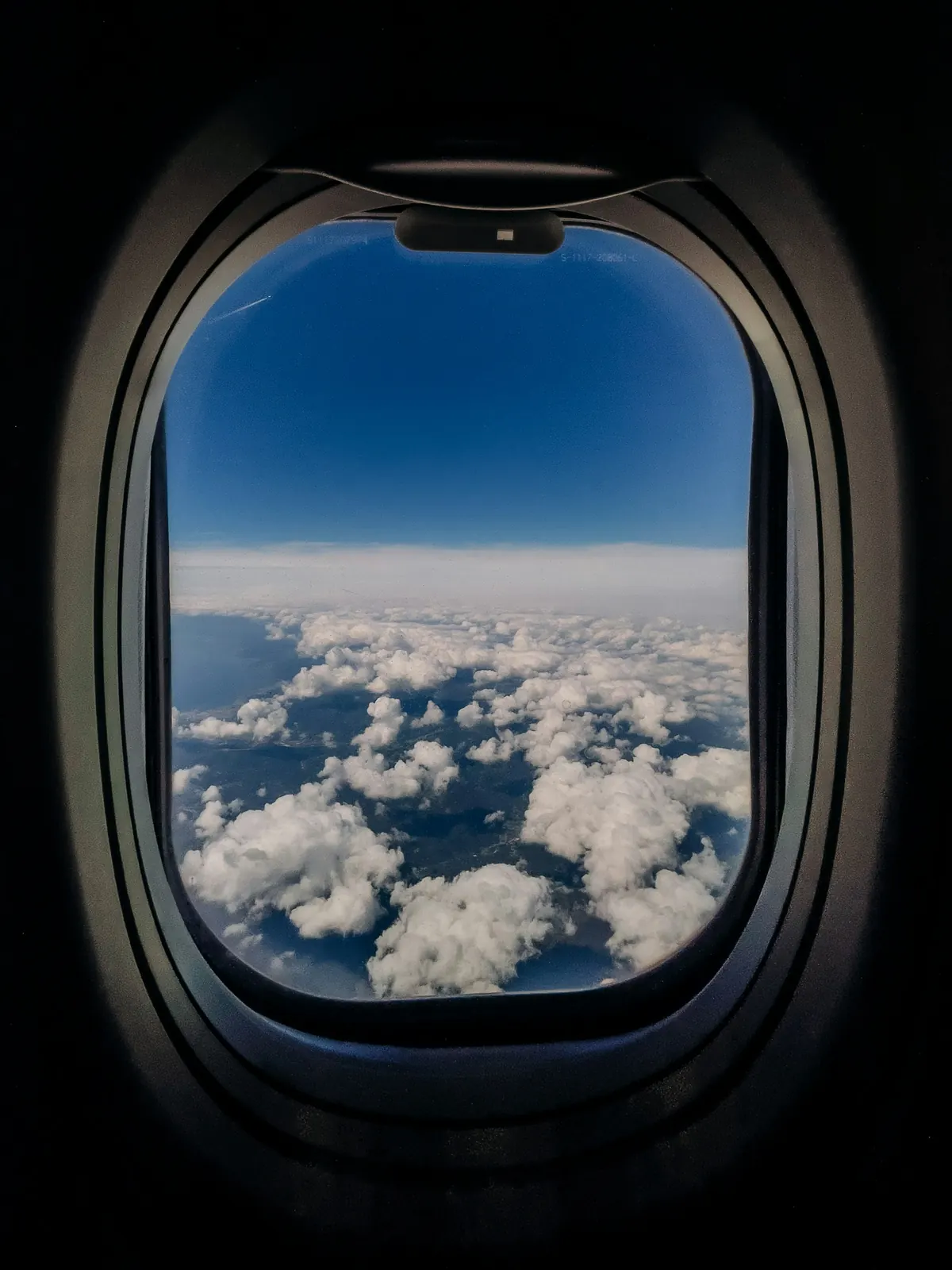
Propeller-driven and efficient on short hops, with a roomy square cabin for its size. The class most likely to fit a small island or mountain airport.
Airport fit: Short strips, islands and mountain fields
Light jet
- 6–8 seats
- 2,000–2,150 nm
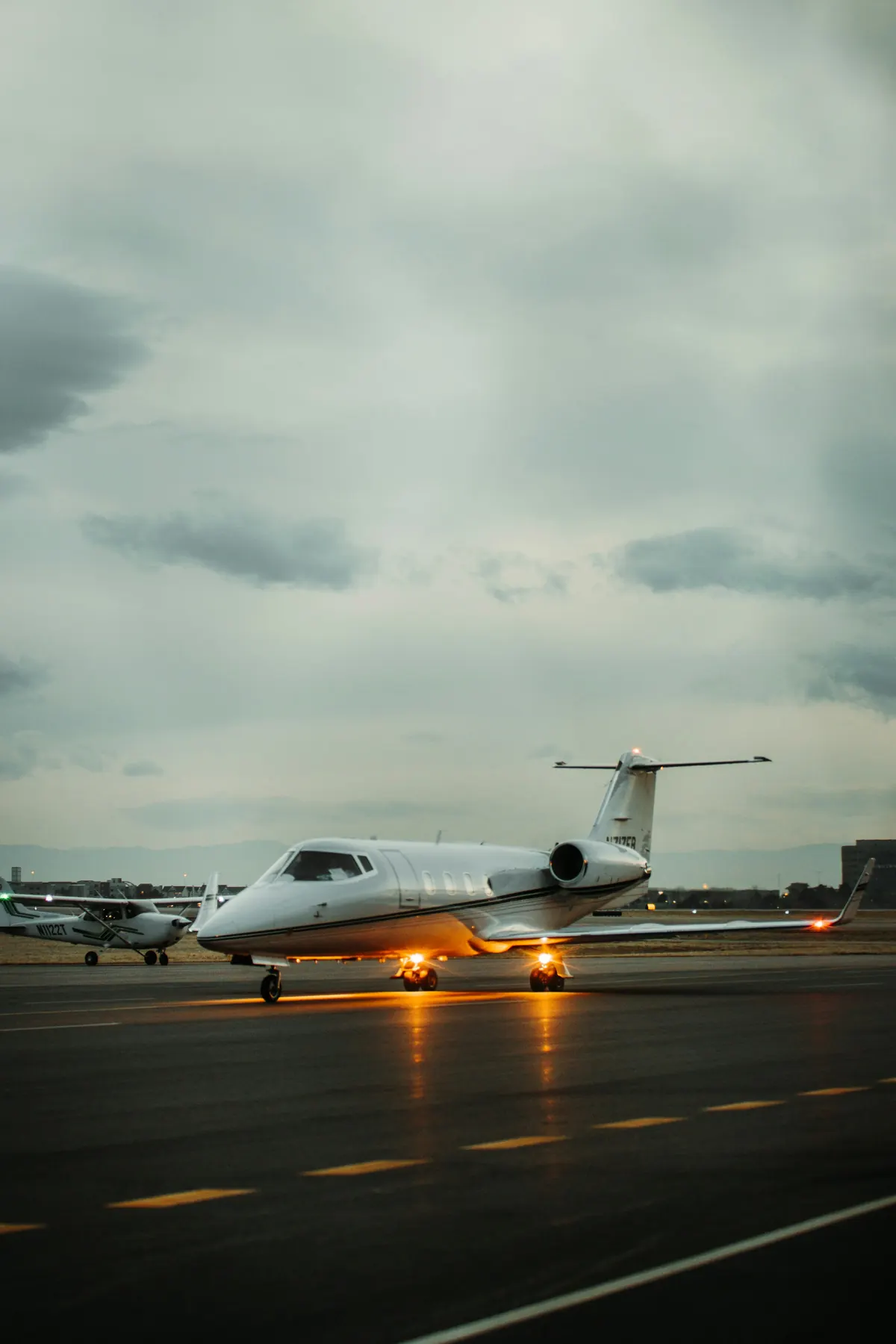
Fast and economical for one to three hours in the air. Seating is comfortable, but bags are limited, so mention skis, golf clubs or strollers.
Airport fit: Most regional and county airports
Midsize jet
- 7–9 seats
- ~2,100 nm
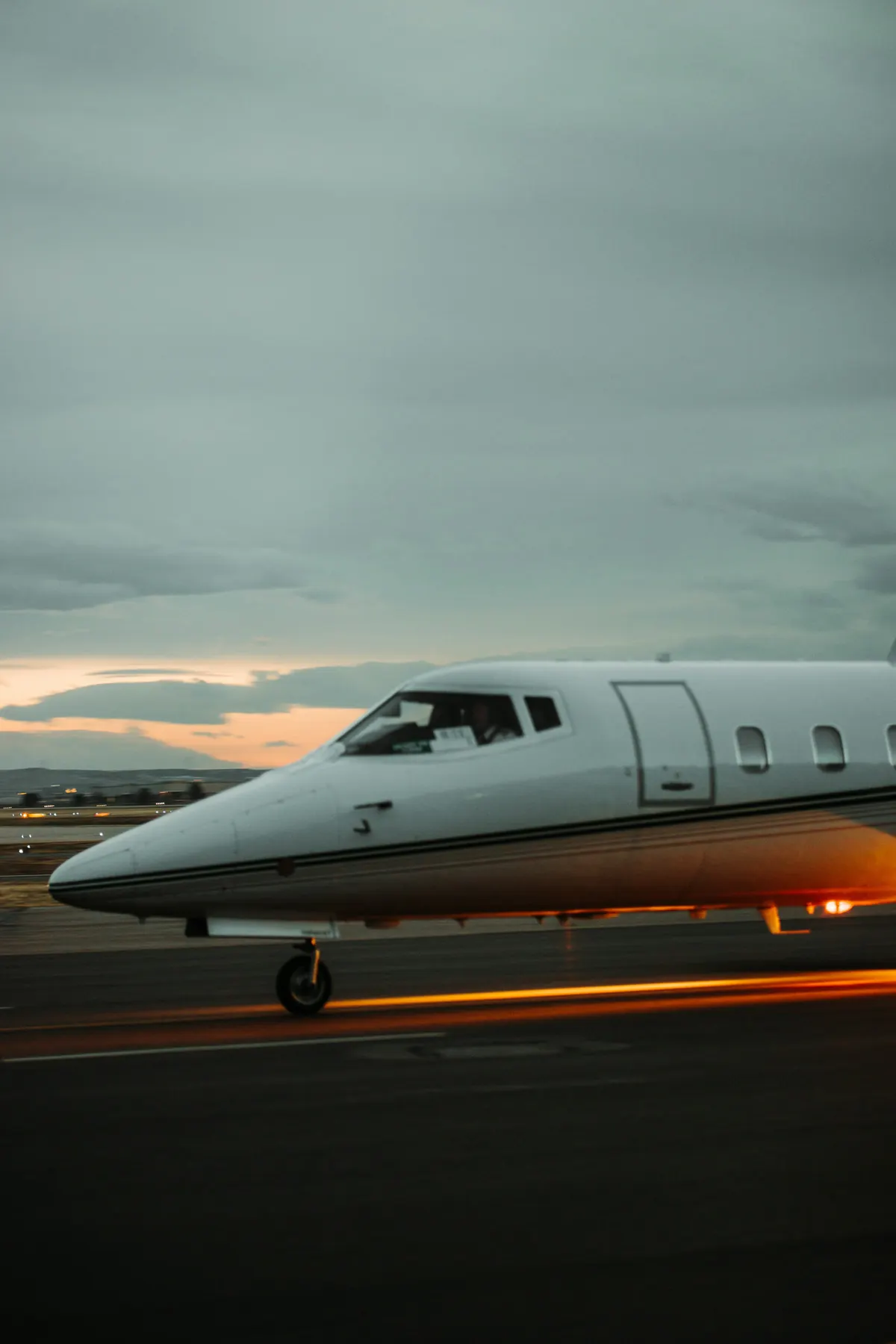
A taller cabin of about 5.7 ft, an enclosed lavatory and room for more luggage. A good match for two to four hours with a full group.
Airport fit: Most regional airports; check the shortest runways

Super-midsize jet
- 8–10 seats
- 3,200–4,000 nm
A stand-up cabin of around 6 ft and range for coast-to-coast nonstop. Needs more runway than smaller jets, so the airport check matters.
Airport fit: Longer runways; check small fields first
Large cabin jet
- 10–16 seats
- 4,000–4,300 nm
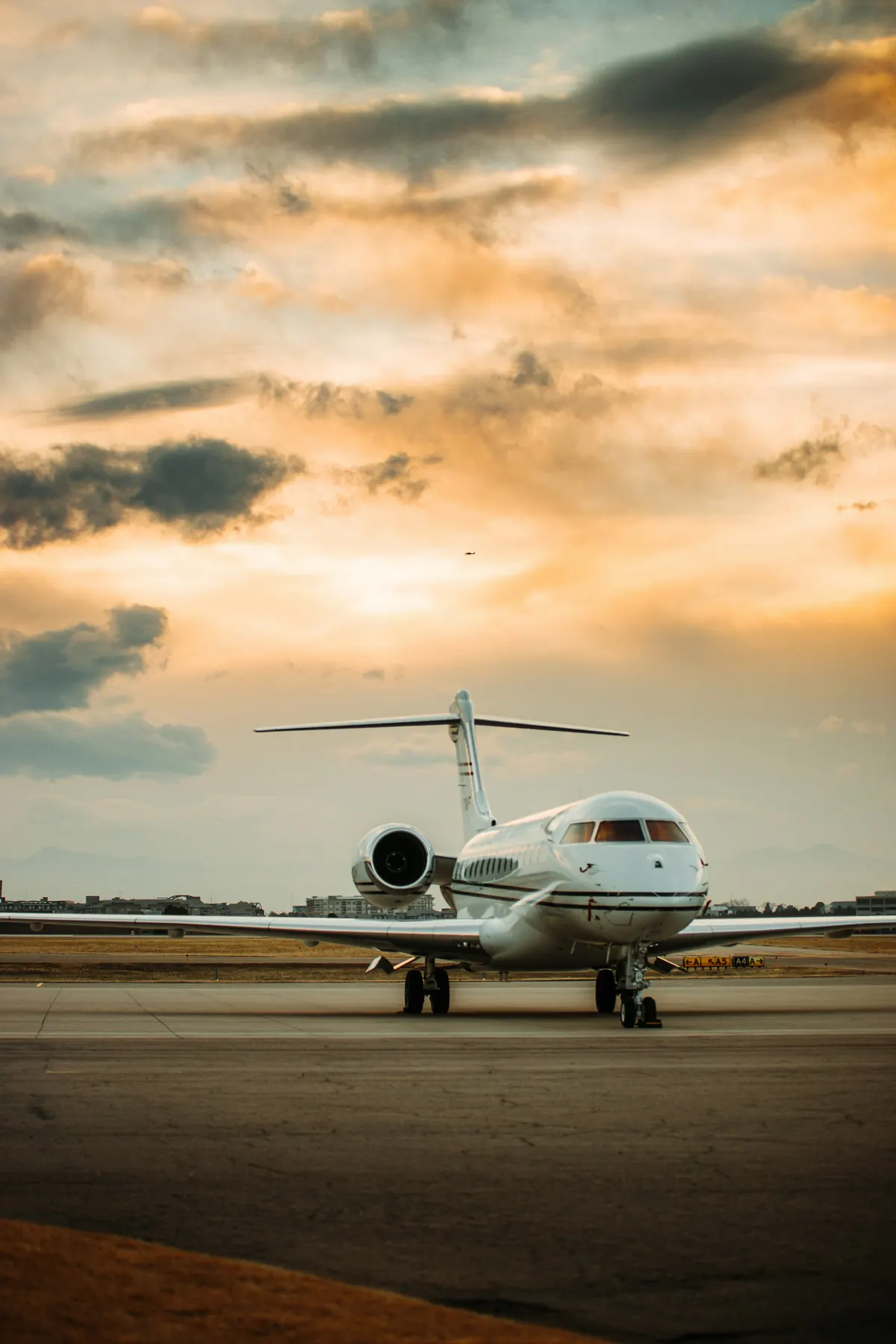
Separate cabin zones, a galley and seats that make into beds. The choice for long flights and big groups, usually from business-aviation airports.
Airport fit: Business-aviation hubs; check weight limits and runway length
Matching the two
Why the aircraft decides the airport
Every aircraft needs a certain length of runway to take off and land safely, and that length grows with weight, heat and altitude. A light jet with four passengers on a cool morning needs far less than a large cabin jet fuelled for a transcontinental flight in July.
Charter operators also plan with margins above the bare minimum, so a runway that suits a jet on a private flight can be too short for the same jet on a charter. Some airports add their own limits on aircraft weight or noise.
That is why we pick the two together: tell us your group and your town, and we will suggest the aircraft and the local airport that work as a pair.
Want the right pair suggested?
Send the trip and your nearest town. Your advisor proposes the aircraft and airport, each option with an all-in price.